What is SEO?
SEO or Search Engine Optimisation, improves your website so search engines can understand, index and rank your pages for relevant searches. It combines technical improvements, useful content, keyword targeting, internal linking and authority-building to strengthen organic visibility.
For Australian businesses, SEO services helps potential customers discover your products or services through relevant searches. Unlike paid advertising, organic visibility can continue generating traffic without paying for every click.
How Long Does it Take for SEO To Work
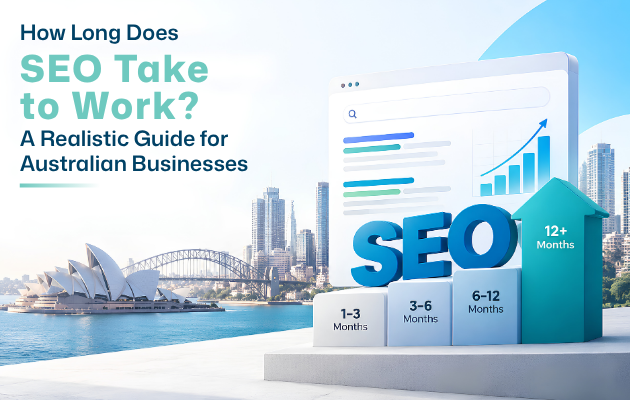
For many websites, measurable SEO progress begins within three to six months, while stronger results can take six to twelve months. However, there is no universal timeline because every website starts from a different position.
Months 1 - 2: Building the Foundation
The early stage usually focuses on technical audits, keyword research, website structure and priority fixes. These improvements prepare search engines to crawl, understand and evaluate your website.
Months 3 - 4: Building Relevance
Existing pages are refined while new content targets relevant searches and customer questions. During this stage, businesses may begin seeing increased impressions and early ranking improvements for less competitive terms.
Months 5 - 6: Measuring Momentum
By this stage, rankings, impressions and organic traffic can provide clearer evidence of progress. Performance data also helps identify which pages, keywords and topics deserve further optimisation.
Months 6 - 12: Growing Authority
Consistent optimisation can produce stronger rankings, broader keyword visibility and increasing organic traffic. Competitive terms may still require additional content, authority and technical improvements before reaching prominent positions.
Why Timelines Vary Between Businesses
A new local business and an established national brand do not begin with the same authority, competition or website strength. Their SEO strategies may therefore produce different results at different speeds.
Why Does SEO Take Time to Show Results?
SEO requires search engines to discover, crawl, index and evaluate website changes before rankings can change. Building relevance and authority also takes repeated optimisation, quality content and consistent signals over time.
Search Engines Need to Process Changes
When you update a page, search engines need to discover and process those changes. Rankings may therefore remain unchanged initially, even when important technical or content improvements have already been implemented.
Authority Takes Time to Build
Websites compete against established pages that may already have strong content, backlinks and brand recognition. Building comparable authority requires consistent publishing, optimisation and relevant references from other websites.
SEO Results Are Not Always Linear
SEO progress rarely follows a perfectly predictable upward line. Rankings can fluctuate, pages can move at different speeds and algorithmic or competitive changes can affect performance during an ongoing campaign.
What are Factors That Influence the Timeline of SEO to Work?
SEO timelines are shaped by several factors, including website history, competition, technical health, content quality, authority and available resources. Understanding these factors makes it easier to set realistic expectations and priorities.
Website Age and History
Established websites may have existing content, backlinks and search history that support visibility. New domains generally need more time to establish relevance, authority and trust within competitive search results.
Industry and Keyword Competition
Highly competitive industries require more effort to compete against established websites. Targeting specific, relevant and less competitive searches can create earlier opportunities while broader authority develops.
Technical Website Health
Broken links, crawl issues, slow pages, poor mobile experiences and confusing site structures can restrict performance. Fixing technical problems creates a stronger foundation for search engines and users.
Content Quality and Relevance
Publishing content alone does not guarantee rankings. Content needs to answer search intent, provide useful information and demonstrate relevant expertise while remaining easy for users and search engines to understand.
Backlinks and Website Authority
Relevant backlinks can strengthen a website’s authority and support competitive rankings. However, earning quality links naturally takes time, particularly for newer businesses without established industry relationships.
SEO Resources and Consistency
The speed of implementation matters because SEO requires ongoing improvements. Businesses that consistently address technical issues, publish useful content and refine existing pages can maintain stronger momentum over time.
Top Mistakes to Avoid During SEO
Many SEO delays come from unrealistic expectations, inconsistent implementation or focusing on the wrong metrics. Avoiding these mistakes helps businesses understand genuine progress and make better decisions throughout their SEO campaign.
Expecting Immediate Results
SEO is not designed to produce instant visibility like paid advertising. Expecting major traffic or lead increases within weeks can lead businesses to abandon strategies before meaningful results have time to develop.
Targeting Only Highly Competitive Keywords
Focusing exclusively on broad, competitive keywords can delay early progress. A stronger strategy balances valuable competitive terms with specific searches where the website has a realistic opportunity to gain visibility.
Publishing Low-Quality Content
Creating large volumes of generic content does not automatically improve rankings. Content should address genuine customer questions, match search intent and provide information that is useful beyond simply including keywords.
Ignoring Technical SEO
Great content cannot compensate for major technical problems. Crawlability, indexing, site structure, mobile usability, page performance and internal linking should remain part of an ongoing SEO strategy.
Stopping SEO Too Early
SEO momentum takes time to develop, so stopping after a few months can interrupt progress. Continue measuring performance and improving priority pages rather than judging the entire strategy too quickly.
Measuring Only Rankings
A single keyword position does not show the full picture. Track impressions, clicks, organic traffic, conversions and qualified enquiries alongside rankings to understand whether SEO is creating meaningful business value.
How Often Do You Need to Update Your SEO?
SEO should be treated as an ongoing process rather than a one-time website project. Regular reviews help identify technical issues, content opportunities, competitive changes and shifts in search behaviour before they affect performance.
Review Technical SEO Regularly
Technical issues can appear as websites change, new pages are added or platforms are updated. Regular checks can identify broken links, indexing problems, performance issues and other obstacles affecting organic visibility.
Refresh Important Content
Existing pages should be reviewed when information becomes outdated, rankings decline or search intent changes. Updating useful pages can keep their information relevant while strengthening opportunities for continued organic visibility.
Monitor Search Performance
Use performance data to understand which pages and searches are gaining or losing visibility. Search Console and analytics data can reveal opportunities for optimisation, new content and conversion improvements.
Adjust Your Strategy Over Time
SEO strategies should evolve as competitors, customer behaviour and search results change. Regular reviews help businesses prioritise the work most likely to improve visibility and support their current commercial goals.
Final Thoughts
SEO takes time, but consistent optimisation can build stronger visibility, relevant traffic and valuable business opportunities. Results vary depending on competition, website health, content quality, authority and how consistently SEO improvements are implemented.
Digiwhiz helps Australian businesses build sustainable search visibility through technical SEO, content optimisation, keyword strategy, local SEO and AI search optimisation. Our approach focuses on improving visibility while aligning SEO with business goals and customer search behaviour.